Coarse Pitch
In a propeller system, coarse pitch refers to the blades being set at a larger angle relative to the plane of rotation. This makes each blade take a bigger “bite” of air, similar to shifting into a higher gear in a car. The main advantage of coarse pitch is efficiency during cruise, since the engine runs at lower RPM while producing good forward thrust, which reduces fuel consumption and mechanical stress. However, it is not suitable for takeoff or climb, because it provides less acceleration and responsiveness.
Fine Pitch
Feathering, on the other hand, is a special setting used primarily when an engine fails, especially in multi-engine aircraft. In this position, the propeller blades are turned so that they are almost parallel to the airflow. This minimizes aerodynamic drag and prevents the propeller from “windmilling,” which would otherwise create significant resistance and make it harder for the aircraft to maintain performance. When feathered, the propeller appears thin when viewed head-on, as the blades are aligned with the direction of flight.
Essentially, fine pitch is like low gear for takeoff and climb, coarse pitch is like high gear for efficient cruising, and feathering is like shifting to neutral when an engine is shut down to eliminate drag
How do Turboprops use Reverse Thrust?
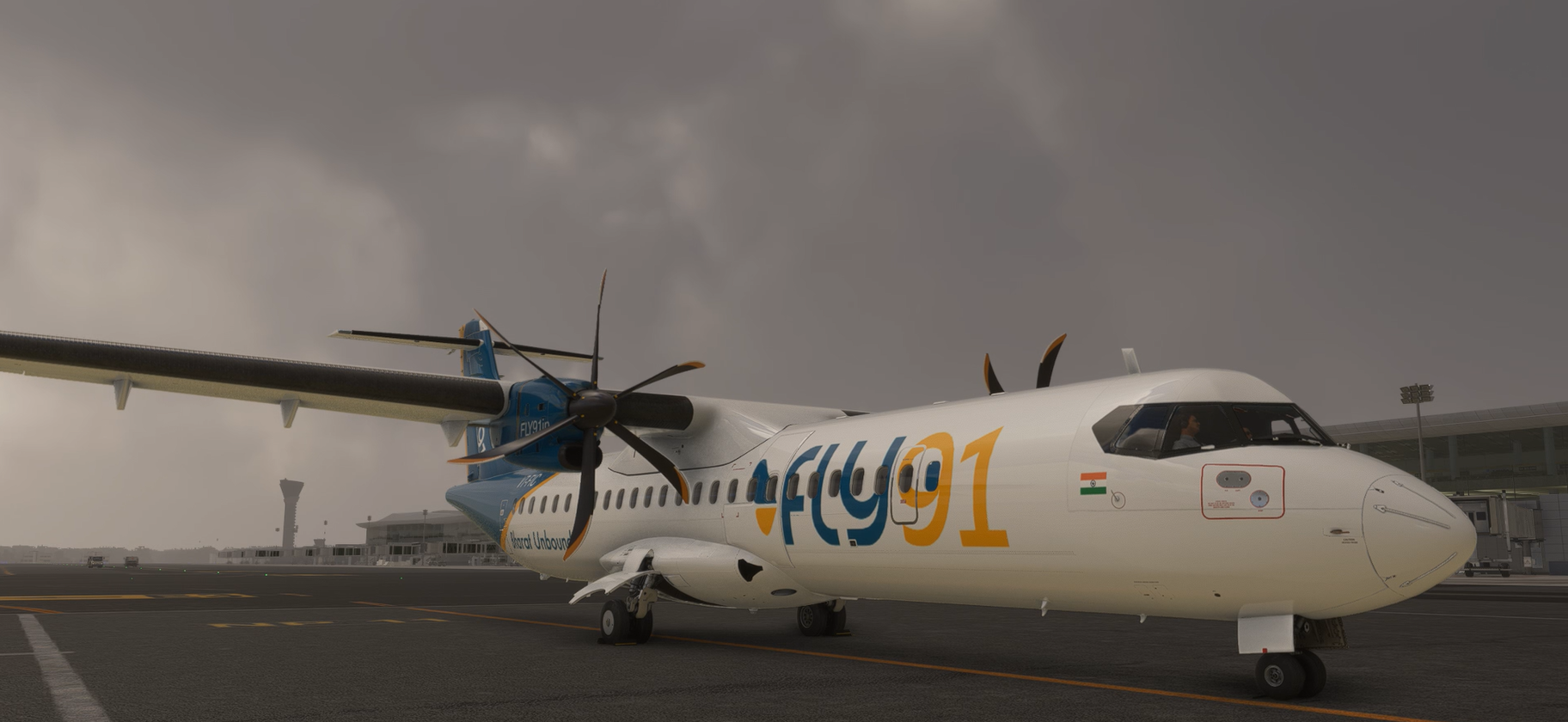
Aircrafts like the ATR 72-600, when the propeller blades are moved into the beta range, they flatten out to very low or even slightly negative angles. This changes the airflow through the propeller, letting it act almost like a variable fan that can reduce or even reverse thrust. Pilots typically use beta during taxiing, ground idle, and reverse thrust after landing. In taxi, beta allows the aircraft to move at slow speeds without riding the brakes, since the propeller can be adjusted to produce only minimal forward thrust.